Triveni Goswami Vernal
(Registered Special Educator CRR: A64010)
SIGNIFICANCE OF NEUROPLASTICITY FOR REMEDIAL INSTRUCTORS
Neuroplasticity has significant implications for learning and thus, plays an important role for Remedial Instructors. The dynamic nature of the brain and its malleability lends itself to bringing about modifications, changes and adaptations in its internal wiring /neural networks, thus paving the way for the acquisition of new information, knowledge and skills.
In the article, Principles of Experience-Dependent Neural Plasticity: Implications for Rehabilitation After Brain Damage (Klein et al., Journal of Speech, Language, and Hearing Research , Vol. 51 , S225–S239 , February 2008) , the authors have provided ten principles of experience based plasticity—
1. Use It or Lose It: Failure to drive specific brain functions can lead to functional degradation.
2. Use It and Improve It: Training that drives a specific brain function can lead to an enhancement of that function.
3. Specificity: The nature of the training experience dictates the nature of the plasticity.
4. Repetition Matters: Induction of plasticity requires sufficient repetition.
5. Intensity Matters: Induction of plasticity requires sufficient training intensity.
6. Time Matters: Different forms of plasticity occur at different times during training.
7. Salience Matters: The training experience must be sufficiently salient to induce plasticity.
8. Age Matters: Training-induced plasticity occurs more readily in younger brains.
9. Transference: Plasticity in response to one training experience can enhance the acquisition of similar behaviours.
10. Interference: Plasticity in response to one experience can interfere with the acquisition of other behaviours.
In the article, Neuroplasticity and Young Children with Autism: A Tutorial (Losardo A, McCullough KC, Lakey ER (2016). Anat Physiol 6: 209), the authors quoting Kleim and Jones state the following, “Learning is the by-product of neuroplasticity. Said another way, neuroplasticity is experience dependent, and behavioural training is key to promoting brain reorganization. The brain needs training to maximize its potential for appropriate functional reorganization.”
Neuroplasticity can contribute towards changes in learning and acquisition of new information within the framework of remedial training. Intervention techniques that are focused on developing basic fine motor or gross motor skills, cognitive skills as well as memory and processing skills often rely on the plasticity of the brain to re-wire itself by creating opportunities for repeated performance of a task related to the targeted skill.
The website of the Dyslexia Association of India (https://www.dyslexiaindia.org.in/trai.html) throws light on this issue by stating the following, “..with regular intervention and cognitive practice the receiving neurons get activated or reinforced and strengthened as they are used. The activation and reinforcement process that happens when neurons fire together to create new routes for signal transmission is generally thought to be one of the principal ways in the plastic brain reorganizes itself.”
For example, when a child with Regressive Autism who had lost all skills –verbal and communication, went to a remedial educator, one of the first skills that was worked on, was imitation (both fine motor and gross motor). The skill of imitation, that most of us take for granted, is the bedrock of all forms of subsequent learning. The imitation skill was taught through various activities, repeated frequently. Over time, the child began to acquire the skill of imitation and could demonstrate it, when given the specific instruction. Also, more importantly, across time and situations he could generalize what he had learned. For example, the child could use the skill of imitation to learn new actions (wiping the mouth with a napkin after food) or sounds he heard in a song /rhyme. This shows that neural pathways pertaining to this skill, were laid down and strengthened over time, with the repeated performance of the task related to the skill.
CONCLUSION
The brain is a one of the most dynamic and fascinating organs of the human body. It is a complex structure, made up of 100 billion nerves and trillions of synapses. It controls all bodily functions—from larger gross body movements and balance to finer, more subtle functions such as the circadian rhythms, breathing, hunger, thirst etc. The brain houses the mind—the cognitive functions, language, memory, the interpretation of sensory information, the ability to think, reason, to feel emotions, to express creativity, amongst many others.
The brain has a dense neural network through which signals conveying information are relayed. This neural network is not static and has been shown to rewire itself depending on one’s learning, experiences, developmental growth and brain injury. Two main principles guiding the organization and re-organization of the neural network are:
a) Neurons That Fire Together, Wire Together: Neural pathways in the brain are formed and reinforced due to repetition. For example, when we learn to play a musical instrument such as guitar, repeated practice helps us in picking up the notes and rhythm, the fine motor movements of the fingers on the strings etc. Initially, we may make a lot of mistakes. But repeated and frequent practice, will help us remember the movements, the pace to the tune etc. This is a result of new neural pathways being laid down and being strengthened over time.
b) If You Don’t Use it, You Lose it: Neural pathways not actively engaged in the performance of a task for an extended period of time can show signs of degradation. For example, with the use of gadgets in our daily lives, a lot of cognitive functions have become weak. Before the use of cell phones, we used to write down lists of ‘things to do’ but now, we are dependent on the ‘alarm’ feature on the phone for all reminder/appointments etc.
Neuroplasticity is at the heart of Remediation Training. When an individual comes for any form of remediation (could be cognitive skills, fine motor skills or processing skills etc), the plasticity of the brain shapes the ability of the individual to acquire new information and skills, thereby bringing about marked changes in their lives. Frequent, repetition of tasks related to a particular skill in remediation, can do wonders in the acquisition of that skill.
REFLECTIONS
For me, Neuroplasticity has acquired a much deeper significance as I have seen its effects on my father as well as my son, Kabir.
My father had two consecutive strokes (over a span of two days, the second one in the hospital, when he was admitted for the first) in 2016. The first stroke wasn’t as deadly and the doctors had said that he would recover completely. But the second stroke, made him slip into coma for 6 days. When he regained consciousness, he had paralysis, he lost clarity in speech etc. After being hospitalized for 2 months in Guwahati, he was brought to Hyderabad. He was admitted to APOKOS (a Rehabilitation hospital within the Apollo campus) for another 2 months and treatment continued for 5 more months. Intensive physiotherapy, occupational therapy and speech therapy brought about a remarkable difference to his life. He was off nasal feeding, he could use his hands to hold a spoon/fork to feed himself, he could use the razor to shave, he could use the mug to pour water and take a bath. Some impairments could not be fixed. Since the stroke affected his Cerebellum, he lost his ability to balance. His left hand was crooked at an angle; he had frequent spells of dizziness and his mobility was restricted to a wheelchair. But intensive, frequently repeated tasks targeted at a particular skill helped him regain many of the muscle movements he had lost, post stroke.
Kabir was diagnosed with Regressive Autism around 2.5 years of age. By that time, he had lost his speech and communication skills. He lacked eye contact as well. Early intervention comprising of sessions of ABA and VBA worked on his imitation skills first, followed by sign language to communicate. At Action for Autism, for three months, during the Parent Child Program Training (PCTP) in 2014, they worked intensively with sign language and communication. He was taught simple signs for water and food and toys he liked. The frequent and repeated performance of the task, helped him form an association between the sign as a mode of communication and his need (eg., jam). For example, they asked us to keep a small bottle of his favourite food, in his line of vision but out of his reach. At a given time, the bottle would have no more than 2-3 spoons of jam. So, the child was encouraged to request for jam (by signing), and a little bit of jam was given to him. This was repeated constantly till the amount of jam was completely exhausted (that is why the portion of jam was kept small). This kind of requesting sessions were done several times in a day, till the child realized that signing could help him communicate his need for a particular item.
Once this association was established and learned, he could generalize it for other things he wanted. Speech was very limited then, just a few sounds of animals. After doing speech therapy for more than a year with a Speech Language Pathologist in Hyderabad, including The Listening Program (TLP), his vocabulary dramatically improved. He could blend sounds; his pronunciation improved for many words. He could say one phrase (along with sign language) – “I want xyz.”
Over the years, his vocabulary has shot up, but he now communicates mostly via echolalic phrases, which is now recognized as being a Gestalt Language Processor (GLP). Communication, largely, is still need based, though. He can read age-appropriate books, he can write, and he can type. He is quite adept at using the computer. Comprehension is still a work in progress. He loves to create art and is an emerging artist. And we regularly use the Avaz app (an Augmentative and Alternative Communication-AAC-designed to help individuals with communication difficulties to express themselves) with him to teach new concepts, discuss story books and play games like Place, Animal & Thing.
Having witnessed these two major, life changing events in my life, I truly believe that it is neuroplasticity that helped both my father as well as Kabir, acquire new skills and bring about changes in the quality of their lives.
************
**An earlier version of this piece had been submitted as an assignment for the Dyslexia Teacher Training course with Ripples-Centre for Enhanced Learning, Hyderabad (run by Afshan Jabeen, a RCI registered Clinical Psychologist, AMI Montessorian and Certified SIS Dyslexia Therapist) in 2018. **
SOURCES:
BOOK:
The Brain That Changes Itself, Norman Doidge (2007), Viking Penguin, USA
WEBSITES:
https://www.webmd.com/brain/picture-of-the-brain#1
https://mayfieldclinic.com/pe-anatbrain.htm
https://www.cognifit.com/brain-plasticity-and-cognition
https://www.verywellmind.com/what-is-brain-plasticity-2794886
https://en.wikipedia.org/wiki/Hebbian_theory
https://www.supercamp.com/what-does-neurons-that-fire-together-wire-together-mean/
https://sharpbrains.com/blog/2008/02/26/brain-plasticity-how-learning-changes-your-brain/
https://www.medicinenet.com/script/main/art.asp?articlekey=40362
‘https://www.sciencedirect.com/topics/neuroscience/neuroplasticity
https://www.britannica.com/science/neuroplasticity
https://www.dyslexiaindia.org.in/trai.html
https://blog.udemy.com/neuroplasticity-exercises/
https://www.ncbi.nlm.nih.gov/pmc/articles/PMC5649212/
JOURNALS:
https://www.longdom.org/open-access/neuroplasticity-and-young-children-with-autism-a-tutorial-2161-0940-1000209.pdf
https://www.researchgate.net/publication/5620837_Kleim_JA_Jones_TAPrinciples_of_experience-dependent_neural_plasticity_implications_for_rehabilitation_after_brain_damage_J_Speech_Lang_Hear_Res_51S225-S239
http://www.iosrjournals.org/iosr-jhss/papers/Vol.%2023%20Issue4/Version-4/E2304043338.pdf
Author Dr.Triveni Goswami Vernal
Dr.Triveni Goswami Vernal is a Registered Special Educator (CRR: A64010), a Psychologist and an Expressive Arts Therapy Practitioner (UNESCO-CID). She is an Avaz Certified Educator and Certified in Dyslexia Teacher Training. She is also an art educator for children with additional needs.
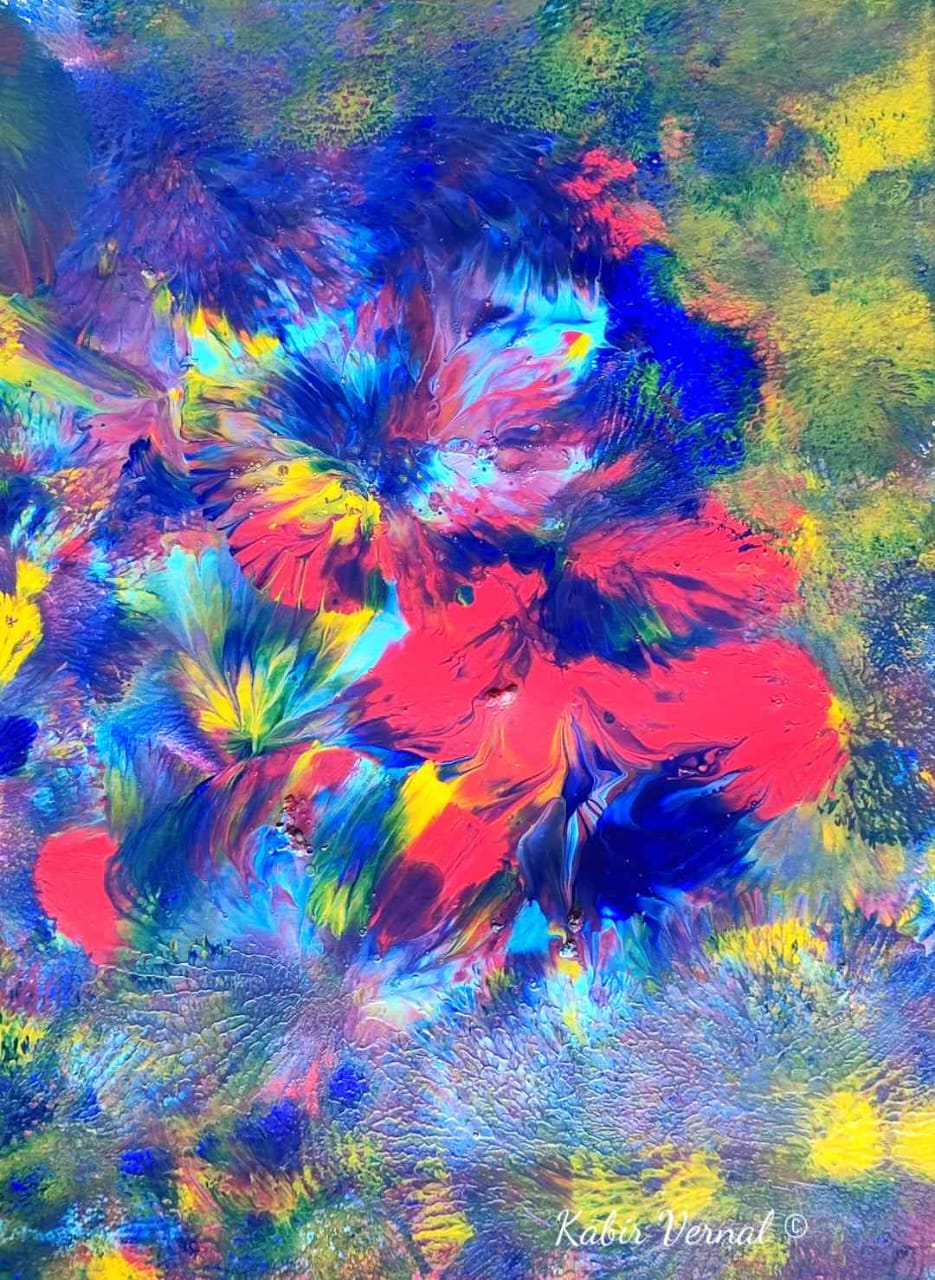
Galaxy
Acrylic Painting on Ivory Paper
Kabir Vernal
Leave a Reply