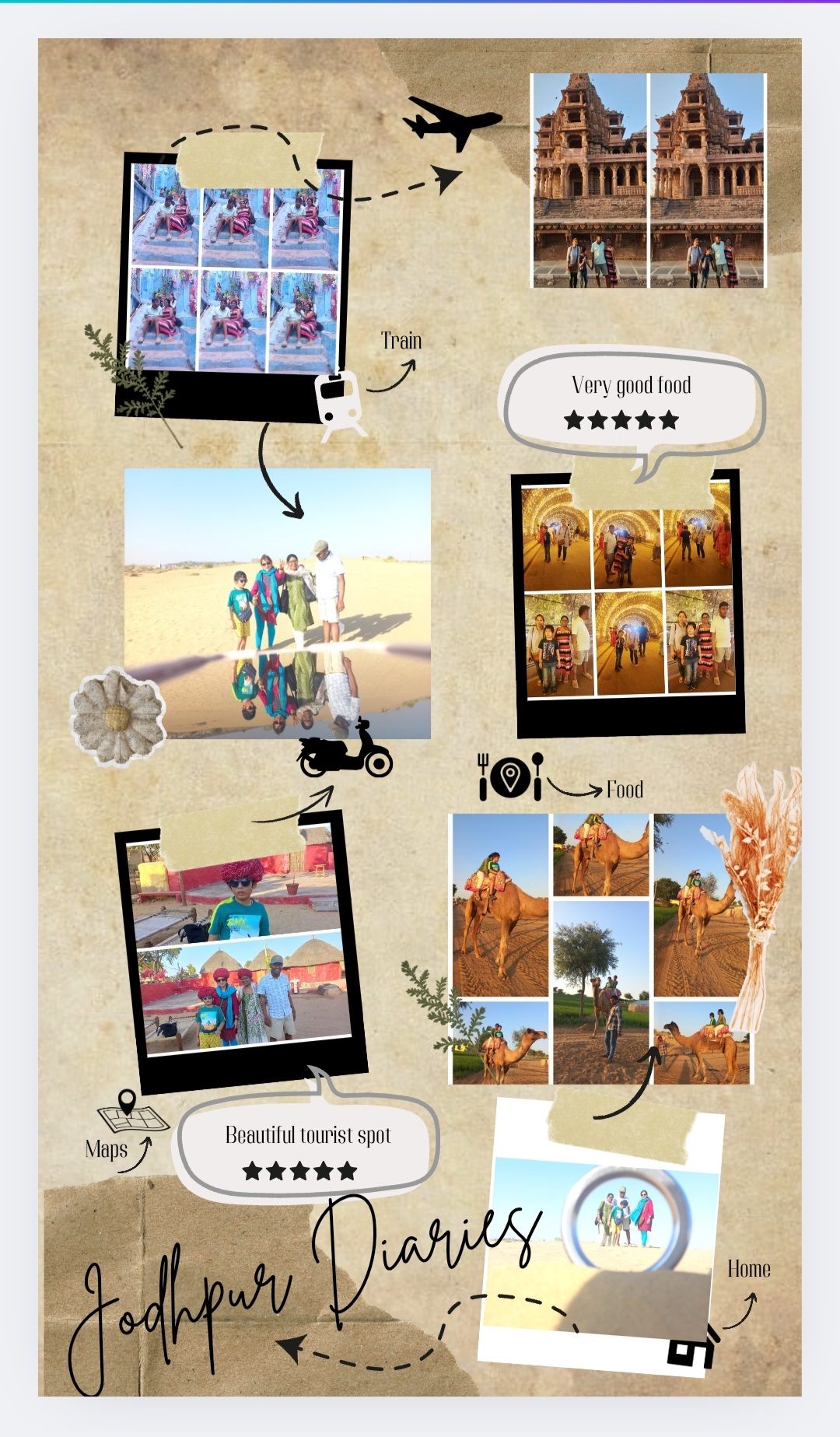
Planning, strategies challenges, triumphs and lessons learned.
As I reflect on our trip to Jodhpur, I am filled with gratitude and joy, knowing that we created lifelong memories with Yuvaan, Simmi ma’am and her son Karthik. By employing some common special education strategies and being mindful of our childrens’ needs, we created a stress-free and enjoyable experience for them during the trip.
Pre-Trip Preparation: Since it was Yuvaan’s second trip in his life, and maiden trip with me, hence, before our trip, I prepared Yuvaan, by providing him with the following information verbally about the trip,
• Place
• Dates
• Flights dates, timings and necessary details
• Hotel name and pictures of the hotel post our bookings.
• An itinerary(verbal) for him, which made him aware about our rough schedule of our trip, including pictures from the internet, to help Yuvaan understand the daily plans.
• Discussed expectations: I talked to Yuvaan about what to expect during the trip, including the sights, sounds, heat and experiences. This helped him prepare mentally and emotionally.
• Involved him in packing our items: I packed Yuvaan’s favorite clothes, essentials, watch, cap, sunglasses, snacks, headphones, his gaming phone to provide him a sense of comfort in unfamiliar surroundings. These familiar items served as a security blanket, reducing stress and anxiety in him.
Strategies for stress-free sightseeing and travel
During our trip, we used the following strategies to maintain a stress-free environment:
1. For me, the most crucial tip for navigating challenging situations is to prioritize patience, turn my energy saver mode on, and conserve energy whenever possible. As a neurodivergent individual with co-occurring health conditions, including anxiety, I must admit that traveling, crowds, and extreme temperatures – especially heat and sun exposure – is overwhelming and a complete ‘no’ for me.
To cope with these stressors during our recent trip, I employed several strategies to maintain my emotional equilibrium. These included – chanting, practicing silence, and taking time for self-reflection. While this meant sacrificing some social time with Simmi ma’am, I prioritized my own sanity and well-being, as well as Yuvaan’s needs, to ensure a successful and enjoyable journey for all.
2. Though I’m known for my perfect routines, and discipline, I remained flexible with our plans, allowing Yuvaan to take breaks, halt and rest when needed. This flexibility helped prevent overwhelm and burnout in both of us.
3. Moreover, I maximized the utilization of available resources to provide Yuvaan with valuable experiences. For instance, on Day 1, I incorporated the mini adventure park activities and open gym equipment at Mandore Gardens into a spontaneous Occupational Therapy (OT) session for Yuvaan.
4. Also, the diverse environments we encountered offered a rich visual sensory diet for Yuvaan. The captivating displays of lights and water bodies, including the light show, fountains, lakes, dams, and ponds, as well as the colorful- vibrant markets, number marked at forts and shops, and tactile inputs through opportunities for play with sand, water, animals, trees, and plants, sound of ‘Iktara’ music adding to soothing auditory inputs, all contributed to a stimulating sensory diet experience. I allowed Yuvaan to relax and absorb these experiences at his own pace, simply by observing them as much as he desired.
5. Facilitated sensory integration approaches, enabling Yuvaan to regulate his senses effectively. These readily available, informal sensory techniques were highly beneficial in reducing sensory overload and anxiety in him and in individuals on spectrum in general, promoting a sense of calm and well-being.
6. To help satiate Yuvaan’s curiousty about routines, what’s happening around and what are the plans..and to make him feel secure and in control, I kept him informed about our daily plans in detail( verbally), providing him with regular updates. In fact, he would often ask about the next day’s plan in advance, so I would share with him where we would be going, what time we would be leaving, and what exciting experiences he could expect to have. I employed a thoughtful approach when sharing this information, starting by highlighting the most enjoyable aspects of the upcoming activity, then gently introducing any potential challenges he might face, and finally refocusing on the positive aspects to alleviate any anxiety that might arise.
7. Encouraged good behavior and reinforced positive experiences, we utilized positive reinforcement techniques throughout our trip. Whenever Yuvaan accomplished something challenging, such as walking miles in the scorching heat or waiting patiently for hours in a queue, I rewarded him with praise, his favorite snacks, and refreshing lassi and nimbu pani breaks. Additionally, I offered incentives like television time and games on the phone at the hotel sometimes, which motivated him to continue demonstrating positive behavior. This strategic use of positive reinforcement had a positive impact on Yuvaan, helping him to build his confidence and self-esteem.
8. To ensure a smooth and enjoyable trip, we moms also divided our responsibilities from the outset. We strategically allocated tasks to optimize our time and energy. Simmi ma’am took charge of interacting with the public, handling check-ins, and managing other logistical aspects, while I focused on caring for the children.
9. During sightseeing excursions, we further divided our tasks to maximize efficiency. I captured memories by strategically taking pictures and videos handholding children while Simmi ma’am handled queue management and ticket purchases. This thoughtful division of labor significantly eased our overall workload, allowing us to relax and fully immerse ourselves in the trip experience.
We faced some challenges during the trip:
1. ‘We’ the ‘neurodivergent folks’ struggled with the crowds, heat and noise at some of the tourist attractions. We had to adapt ourselves and find quieter alternatives.
2. One of the challenges was navigating the bustling narrow streets of Jodhpur. However, with the help of our hotel staff and local guides, we were able to overcome this challenge and explore the city safely.
3. Sometimes, we had difficulty in quick transitioning between plans and activities and locations as we are habitual of set daily routines and activities in our comfort zone, but we managed to navigate these challenges as well.
Nevertheless, we experienced many triumphs like:
1. Despite some challenges we faced, our children demonstrated exceptional resilience and adaptability, showcasing their ability to thrive in unfamiliar and demanding environments. Yuvaan, in particular, exhibited remarkable coping skills, navigating crowds and noise with ease, and even deriving enjoyment from some of the most daunting experiences.
2. Notably, Yuvaan bravely participated in activities that pushed him out of his comfort zone where even I was scared and petrified, such as the exhilarating roller-coaster jeep safari, scary camel ride, and nighttime travels through the desert and villages.
3. Yuvaan also demonstrated impressive endurance, tolerating and walking miles in the scorching 40-degree heat and sun and showcasing patience and self-regulation by waiting, taking turns, and diligently following instructions from others. These accomplishments not only filled us with pride but also underscored the value of exposing our children to novel experiences that foster growth, confidence, and self-awareness.
Key takeaways and the lessons learned
Our trip to Jodhpur was an unforgettable adventure that taught us many valuable lessons about traveling with special needs kids. From navigating crowded streets to managing sensory needs, we learned to overcome obstacles and create unforgettable experiences for our kids.
1. One of the most important lessons we learned was the importance of planning and preparation. By researching and preparing for our trip in advance, we were able to anticipate and overcome many of the challenges we faced.
2. Another lesson we learned was the importance of being flexible and adaptable. Traveling with special needs kids requires a great deal of flexibility and adaptability, and we learned to roll with the punches and adjust our plans as needed.
3. The trip helped me better understand Yuvaan’s needs, challenges, strengths and preferences, informing our future planning and decision-making.
4. It offered many opportunities for Yuvaan to strengthen our relationship and have a sense of bonding and connection with his “Aunty ma’am and Karthik Bhaiya”
5. A renewed sense of confidence and competence for him.
6. Finally, we mothers learned the importance of seeking support and accommodations when traveling with special needs kids. From hotel staff to local guides, we were grateful for the support and accommodations we received throughout our trip. The people of Jodhpur were incredibly welcoming and well-behaved. They were friendly and courteous, always willing to lend a helping hand. The kids enjoyed interacting with the locals and villagers, who were patient and understanding of their needs.
Overall, our trip to Jodhpur was an unforgettable learning experience. We created memories that will last a lifetime, and we learned valuable lessons about resilience, adaptability, and the importance of community.
We hope that our story will inspire other families with special needs kids to take the leap and plan their own adventures or next time join us in ours.
Immerse yourself in some memorable moments.
Author Shilpi Mayank Awasthi
Founder SpecialSaathi
Leave a Reply