PUBERTY AND AGGRESSION IN INDIVDUALS WITH AUTISM
Triveni Goswami Vernal
(Registered Special Educator: A64010)
Puberty can be an emotionally taxing phase for individuals on the Autism spectrum, especially when they are unable to communicate how they feel with the various changes taking place within their bodies.
Hormonal changes during puberty can bring about a wide range of emotional fluctuations, including but not limited to—
a) Mood changes
b) Feelings of anxiety
c) Heightened sensitivity
d) Frustration
e) Anger
When individuals on the spectrum do not have a means to express themselves, whether through speech, or sign language, or communication boards or an assistive device, the pent-up emotions, often do not find a suitable outlet, and can then transform into aggressive behaviour.
It must be remembered that “all behaviour is communication”. The moment we begin viewing behaviour from that lens, it changes the way we respond to it. Aggressive behaviour can take many forms and it may not, always be feasible to anticipate what form it may take, but if a particular behaviour repeats itself across several occasions, then one must work on providing the individual with an alternate means to express that anger.
SENSORY CHALLENGES, FRUSTRATION AND ANGER
Anger might be an outcome of several connected, known or unknown triggers. Sensory challenges may peak during puberty. When sensory sensitivities crop up and the individual is unable to regulate their sensory experience, it often leads to frustration, which then subsequently, leads to anger and angry outbursts. Sometimes, that anger is directed at others and at other times, it is directed to oneself.
Heightened emotional sensitivity can also lead to a perception amongst individuals on the Autism spectrum, of not being understood. Thus, any delay in responding to their needs/wants, can translate into frustration and rage.
CONCLUSION
Parenting a child during puberty can be quite challenging, and more so, when the child is neurodiverse. As a parent/ caregiver, one must monitor how the individual interacts with his or her environment, to understand where the challenges may be arising from.
Creating a sensory-friendly environment with lots of visual supports and providing sensory breaks often, may help ease the frustration and subsequent, anger. Also providing the means to communicate and express their feelings, whether it is through speech, or sign language, or communication boards, or assistive devices like Avaz/letter boards/proloquo2go etc., can help individuals on the Autism spectrum, manage puberty related emotions, much better.
RESOURCES:
https://childmind.org/article/autism-and-puberty/
https://www.autismparentingmagazine.com/autism-and-puberty-aggression/#:~:text=Aggression%20related%20to%20puberty%20and,and%20creating%20a%20supportive%20environment.
https://www.massgeneral.org/children/autism/lurie-center/puberty
https://livingwellwithautism.com/how_to_use_social_stories/puberty_tips_and_social_stories
https://able2learn.com/categories/puberty.html
https://www.thewatsoninstitute.org/resource/anger/
https://www.autismspeaks.org/expert-opinion/autism-puberty-aggression
https://www.autismworks.com/download-anger-management-social-story-one-click-download
************
Author Triveni Goswami Vernal
Triveni Goswami Vernal is an Autism advocate, registered Special Educator (CRR A64010) and an Independent Researcher. Her areas of interest include Autism, Disability Rights, Gender, Art and Northeast studies. She is a mum to an 13 year old on the Autism Spectrum.
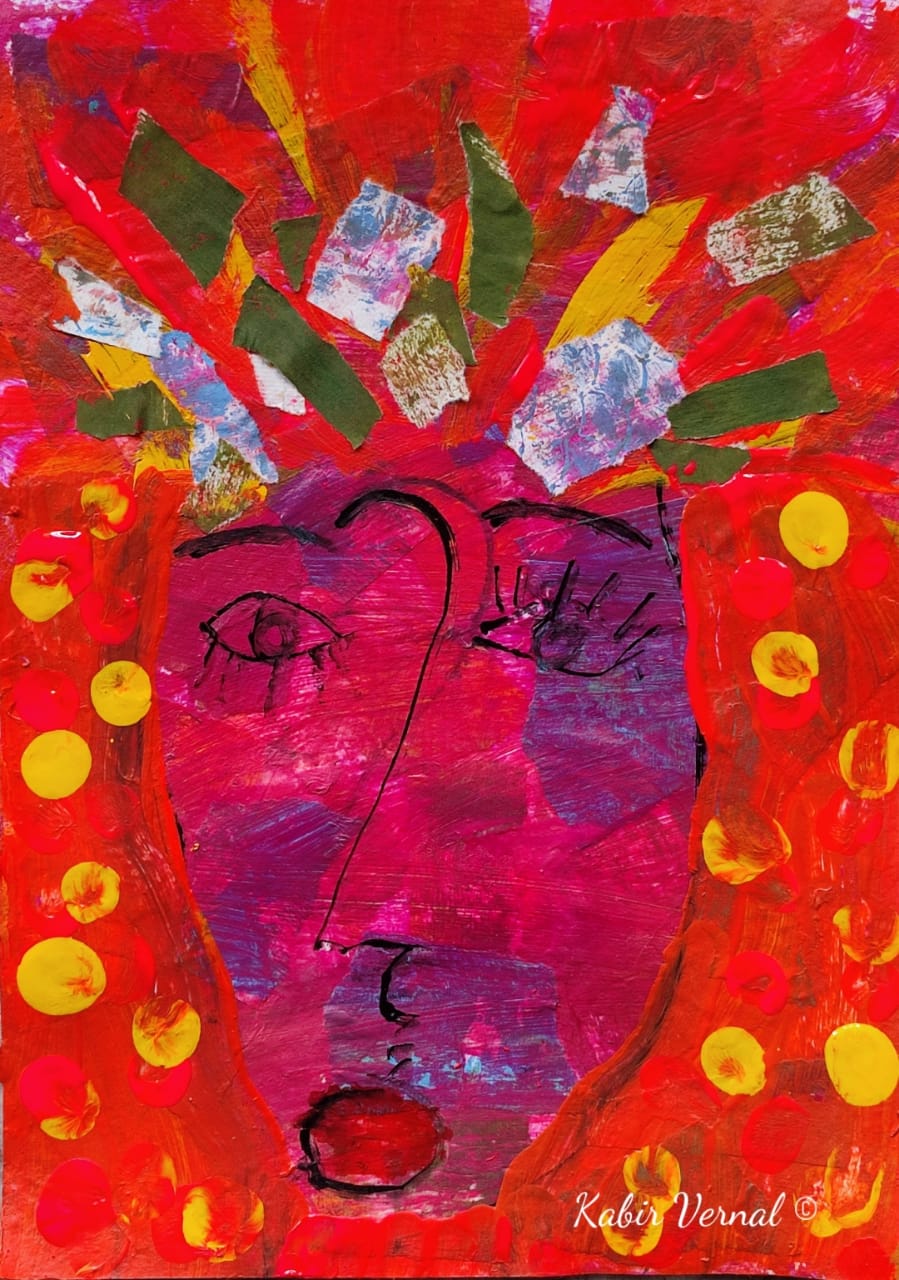
Artwork- “Woman with Flowers on her head’
Acrylic Painting and Collage on paper. Artist: Kabir Vernal
Leave a Reply