Triveni Goswami Vernal
(Registered Special Educator CRR: A64010)
A few weeks ago, I had attended a workshop by Soma Mukhopadhyay (founder Rapid Prompting Method/RPM) and she introduced us to a term, “Aphantasia” that I had never heard about before. Aphantasia is defined as a feature or a characteristic. It is “when your brain does not form or use mental images as part of your thinking or imagination”
(https://my.clevelandclinic.org/health/symptoms/25222-aphantasia). It is not considered a disability or a disorder but merely as a difference in the way the brain functions.
It is a relatively new area of research. It can be congenital (from birth) or acquired later in life. Research has shown that a lot of people with Aphantasia have Autism like traits.
So, why is Aphantasia important? There might be an overlap between Aphantasia and Autism. According to the article, Understanding Aphantasia and Autism (https://reframingautism.org.au/understanding-aphantasia-autism/),
“Aphantasia is a cognitive phenomenon characterised by the inability or difficulty to voluntarily generate visual mental imagery. Coined by Professor Adam Zeman, a cognitive and behavioral neurologist, aphantasia refers to the absence of the mind’s eye. .. it is simply a different way of processing and experiencing the world. Research suggests that there may be a higher prevalence of aphantasia among Autistic individuals compared to the general population. While the exact relationship between the two is still being studied, it highlights the potential overlap and shared characteristics between Autism and aphantasia”.
VISUALIZATION AND COMPREHENSION
From my own experience, as a parent and an educator, I have observed how teaching comprehension to an individual on the spectrum, is an uphill task. One of the key components of teaching Reading Comprehension, is Visualization. Visualization of the written text/ spoken word, is extremely important for the individual to grasp the meaning of what is being said. While images are an integral part accompanying the written text (in learning materials/books etc), when a child is young, the written text replaces images, in the later years.
If we assume that the child may have a difficulty in forming images in their mind, when they hear of a particular word, we must focus all the more on the Visualization aspect while working on their Comprehension skill.
Individuals with Aphantasia may also struggle with the ability to recall information or visual details from past events, that they have experienced themselves. A study published in the Journal of Neuropsychology in October 22, found that “people with aphantasia are not just poor at recalling autobiographical events that happened in their own past, but are generally worse at all memory tasks. This includes both short- and long-term verbal memory tasks” (https://reframingautism.org.au/understanding-aphantasia-autism/).
Since research in this area is still at a nascent stage, there isn’t much information available on what can be done to enhance visual imagery in individuals with Aphantasia. But an important tool one can use to work on the Visualization skills in Comprehension, is creating Mind Maps.
Mind Maps display information and concepts visually and help an individual to break down a vague concept/word into bite sized information. One can also use Doodling/Drawings to teach a concept, better.

Source: https://www.mindomo.com/blog/biology-mind-map/

Source: https://brainly.in/question/49855497
Thus, we see, that regardless of whether an individual on the Autism Spectrum has Aphantasia or not, Visualization as a skill, needs to be worked upon, while teaching Comprehension. There are multiple ways of visually representing information—Mind maps, Concept Maps, Doodling etc and they need to play an integral role in our teaching strategies with individuals on the Autism Spectrum.
Resources:
https://pridereadingprogram.com/how-to-teach-visualizing-and-improve-reading-comprehension/
https://my.clevelandclinic.org/health/symptoms/25222-aphantasia
https://reframingautism.org.au/understanding-aphantasia-autism/
https://www.magneticmemorymethod.com/aphantasia/
https://www.sciencedirect.com/science/article/abs/pii/S1053810021000131
https://brainly.in/question/49855497
https://www.mindomo.com/
***********
Author Triveni Goswami Vernal
Triveni Goswami Vernal is an Autism advocate, registered Special Educator (CRR A64010) and an Independent Researcher. Her areas of interest include Autism, Disability Rights, Gender, Art and Northeast studies. She is a mum to an 12 year old on the Autism Spectrum.
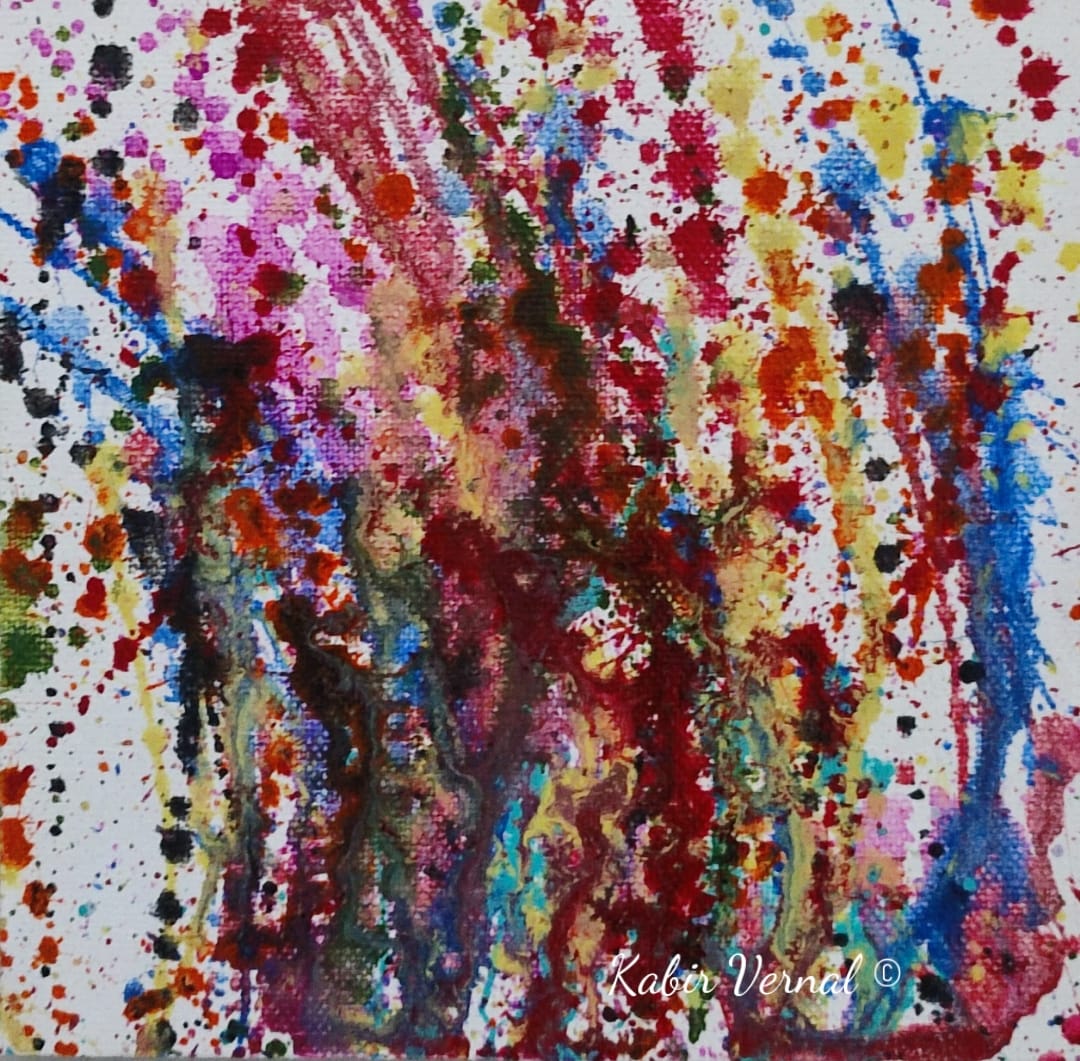
Artwork “Rainbow”
Acrylic Painting on Canvas
Artist-Kabir Vernal


Leave a Reply